



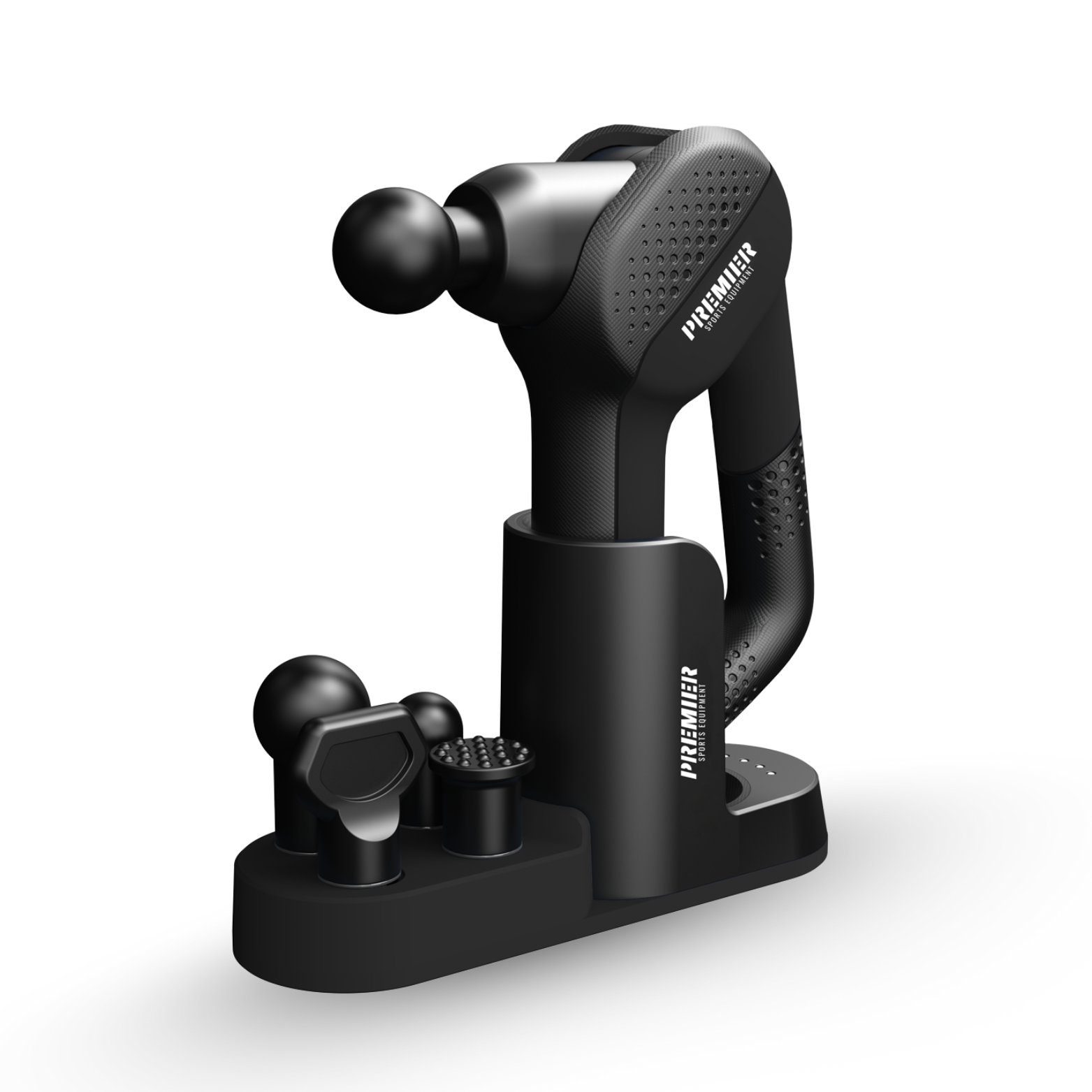





The benefits of percussion therapy depend as much on timing as technique. Use it right, and it becomes one of the most effective recovery and activation tools you can own. Here’s how to get the most out of your massage gun across every stage of training.
Pre-workout: Warming up with purpose
Before you train, the goal is activation, not relaxation. Short bursts of 30–60 seconds per muscle group can increase local circulation, raise muscle temperature, and prepare your body for movement.
Research into pre-exercise vibration therapy shows measurable improvements in power output and reaction time meaning your muscles contract more efficiently right from the first rep. Think of it as a dynamic warm-up you can do in half the time.
Tip: Focus on the muscle groups you’re about to use. For example, target the quads and calves before running, or the shoulders and upper back before pressing movements.
Post-workout: Enhancing recovery
After exercise, your priorities shift. The aim is to reduce muscle tension and promote fluid exchange. Slower speeds and longer durations (one to two minutes per area) help relax tissues, ease stiffness, and support recovery.
Sports science research shows that post-workout percussion therapy can decrease soreness levels within 24 hours, particularly when combined with stretching and hydration.
Tip: Use the massage gun while seated or reclined to allow the body to fully relax.
Rest days: Maintaining mobility
Rest days aren’t about doing nothing, they’re about active maintenance. Light percussion therapy helps keep blood flow moving, preventing that “tight” feeling that can creep in between sessions. It’s also an excellent way to relieve tension from daily posture habits, like sitting at a desk.
Tip: On recovery days, use a low setting and glide the device gently across large muscle groups for three to five minutes.
In summary:
-
Pre-workout: Activate and prime
-
Post-workout: Recover and relax
-
Rest days: Maintain and restore
Each phase serves a different purpose, and together, they form a balanced, evidence-based recovery cycle that keeps you moving better for longer.

